While much of the focus in browser-based learning is on the mouse, players who utilize keyboard shortcuts or type-based answers must scrutinize their desk setup. A sluggish keyboard can introduce devastating delays.
For years, Cherry MX mechanical switches were the gold standard. Today, optical switches are disrupting the competitive scene. Here is everything you need to know about keyboard latency.
The Problem with Metal Contacts
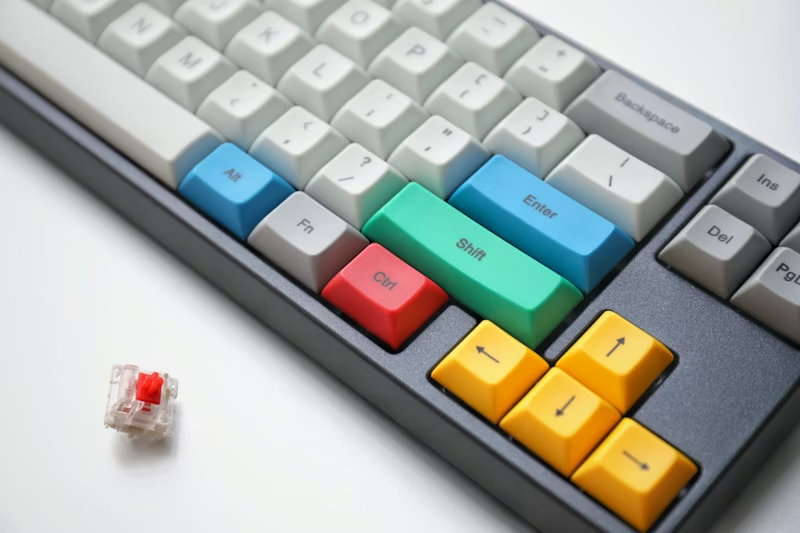
Traditional mechanical switches rely on two metal leaves physically touching to register a keystroke. Because metal bounces slightly upon impact, the keyboard's firmware must wait a few milliseconds to ensure the key was actually pressed. This is called 'debounce delay'.
This debounce delay is hardcoded and typically adds 5 to 10 milliseconds of input lag before the signal even leaves your desk.
The Optical Advantage
Optical switches solve this by removing the metal contacts entirely. Instead, pressing a key breaks a beam of infrared light. Because light doesn't bounce, there is zero debounce delay. The actuation is instantaneous.
Furthermore, many optical switches allow for adjustable actuation points. You can set the key to trigger after being pressed just 1.0mm down, rather than the standard 2.0mm. This means less physical travel time for your fingers.
"Upgrading to an optical keyboard with a 1.0mm actuation point effectively allowed my physical inputs to match the speed of my cognitive processing."
Polling Rates on Keyboards
Just like mice, keyboards communicate with your PC at a specific polling rate. A standard office keyboard polls at 125Hz (reporting its status 125 times a second). A high-end learning keyboard polls at 1000Hz or even 8000Hz.
In a tight Supernova match, a 125Hz keyboard can leave your keystroke sitting in a buffer for up to 8 milliseconds before the PC sees it. Always ensure your peripherals are running at 1000Hz minimum.
Linear switches (like Red or Silver variants) are superior for rapid-fire learning compared to tactile switches (like Blues), as there is no physical bump to overcome during the keystroke.
While gear won't replace genuine skill and knowledge, removing hardware bottlenecks ensures that when you make the right play, the server registers it first.